Canada Truck Driver Immigration Pathway 2025: How to Apply and Qualify
Canada continues to face a shortage of qualified truck drivers, making commercial driving one of the country’s most in-demand occupations. As the transportation and logistics industry expands, employers across several provinces are actively seeking experienced drivers to help keep supply chains moving.
For skilled foreign truck drivers, this demand creates valuable opportunities to work in Canada and, in many cases, qualify for permanent residency through federal and provincial immigration programs.
If you’re considering a trucking career in Canada, this guide explains the available immigration pathways, eligibility requirements, application process, salary expectations, and how truck driving can become a pathway to long-term settlement.
Why Canada Needs Truck Drivers
Canada’s economy depends heavily on road transportation to move goods across its vast territory. From food and consumer products to construction materials and industrial equipment, truck drivers play a critical role in supporting businesses nationwide.
However, many provinces continue to experience shortages of qualified commercial drivers due to an aging workforce, increased demand for freight transportation, and ongoing recruitment challenges.
As a result, transport truck drivers remain an occupation that is frequently sought by Canadian employers, creating opportunities for skilled foreign workers through various immigration programs.
Immigration Pathways for Truck Drivers
There is no single “truck driver visa” in Canada. Instead, qualified applicants can immigrate through several established immigration programs, depending on their experience, job offer, and personal circumstances.
1. Provincial Nominee Programs (PNPs)
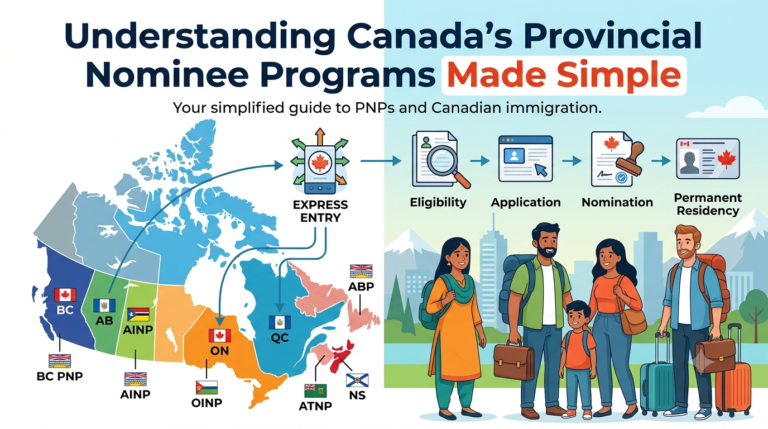
Provincial Nominee Programs remain one of the most popular pathways for truck drivers.
Each province operates its own immigration streams to address local labour shortages, and several provinces regularly recruit experienced commercial drivers.
Truck drivers may find opportunities through provincial programs in areas such as:
- Saskatchewan
- Alberta
- British Columbia
- Manitoba
- Ontario
- Atlantic Canada
Eligibility requirements vary by province, but many streams are designed to help employers recruit workers for occupations that are difficult to fill locally.
A provincial nomination can also strengthen an applicant’s pathway to permanent residency.
2. Express Entry
Some truck drivers may qualify for Canada’s Express Entry system, depending on factors such as:
- Skilled work experience
- Education
- Language proficiency
- Age
- Overall eligibility under an Express Entry program
Canada also periodically conducts category-based invitation rounds for selected occupations experiencing labour shortages, which may benefit eligible transport truck drivers when applicable.
3. Temporary Foreign Worker Program (TFWP)
Many international truck drivers begin their Canadian careers through the Temporary Foreign Worker Program.
Under this program, Canadian employers can hire qualified foreign workers when they are unable to find suitable candidates within Canada.
Applicants generally require:
- A valid job offer
- A work permit
- A positive Labour Market Impact Assessment (LMIA), where required
After gaining eligible Canadian work experience, some drivers may become eligible for permanent residency through other immigration pathways.
4. Atlantic Immigration Program (AIP)
For individuals interested in living in Eastern Canada, the Atlantic Immigration Program offers another possible route.
Designated employers in provinces such as:
- Nova Scotia
- New Brunswick
- Prince Edward Island
- Newfoundland and Labrador
may recruit qualified foreign workers to help address regional labour shortages.
Eligible applicants may eventually qualify for permanent residency after meeting program requirements.
General Eligibility Requirements
Although requirements vary depending on the immigration program, applicants are generally expected to have:
- Relevant commercial truck driving experience
- A valid driver’s licence appropriate for commercial driving
- A clean driving record
- Secondary school education or equivalent
- English or French language proficiency
- A genuine job offer where required
- Medical and security clearances
Some provinces may also require applicants to obtain the appropriate provincial commercial driver’s licence before beginning employment.
How to Apply
While the exact process depends on the immigration program you choose, the general steps include:
Step 1: Research Available Programs
Identify provinces and immigration streams that currently recruit truck drivers.
Step 2: Secure a Job Offer
Many immigration pathways require an offer of employment from a Canadian trucking company or logistics employer.
Step 3: Prepare Your Documents
Typical documents include:
- Passport
- Employment records
- Driving licence
- Educational documents
- Language test results (if required)
- Police clearance certificates
Step 4: Submit Your Application
Apply through the appropriate federal or provincial immigration program and provide all required supporting documentation.
Step 5: Receive a Decision
If approved, you may receive a work permit, provincial nomination, or invitation to continue your immigration application, depending on the program.
Processing times vary based on the immigration pathway, application volume, and individual circumstances.
Can Truck Drivers Become Permanent Residents?
Yes. Many truck drivers who begin working in Canada on temporary work permits later become permanent residents.
Depending on the immigration program and eligibility criteria, applicants may qualify through:
- Provincial Nominee Programs
- Express Entry
- Other federal or regional immigration pathways
After becoming permanent residents and meeting the legal residency requirements, eligible individuals may eventually apply for Canadian citizenship.
Salary Expectations
Truck driving offers competitive earning potential in Canada, particularly for experienced commercial drivers.
Actual salaries depend on factors such as:
- Province
- Employer
- Type of freight
- Long-haul or local routes
- Experience level
Many trucking companies also provide benefits such as:
- Health insurance
- Paid vacation
- Overtime opportunities
- Retirement benefits
- Training and professional development
Why Many Immigrants Choose Truck Driving
Truck driving continues to attract newcomers because it offers:
- Strong employment demand
- Competitive salaries
- Opportunities across multiple provinces
- Potential pathways to permanent residency
- Long-term career stability
For individuals with commercial driving experience, it can provide an excellent opportunity to establish a successful career while building a future in Canada.
Final Thoughts
Canada’s continued demand for qualified truck drivers makes commercial driving an attractive career option for skilled foreign workers seeking employment abroad.
Whether you begin with a temporary work permit or qualify through a provincial immigration program, truck driving can provide valuable work experience and, for eligible applicants, a pathway toward permanent residency.
Before applying, review the latest immigration requirements published by the Government of Canada and the province where you intend to work. Understanding the available programs and preparing a complete application can significantly improve your chances of success.