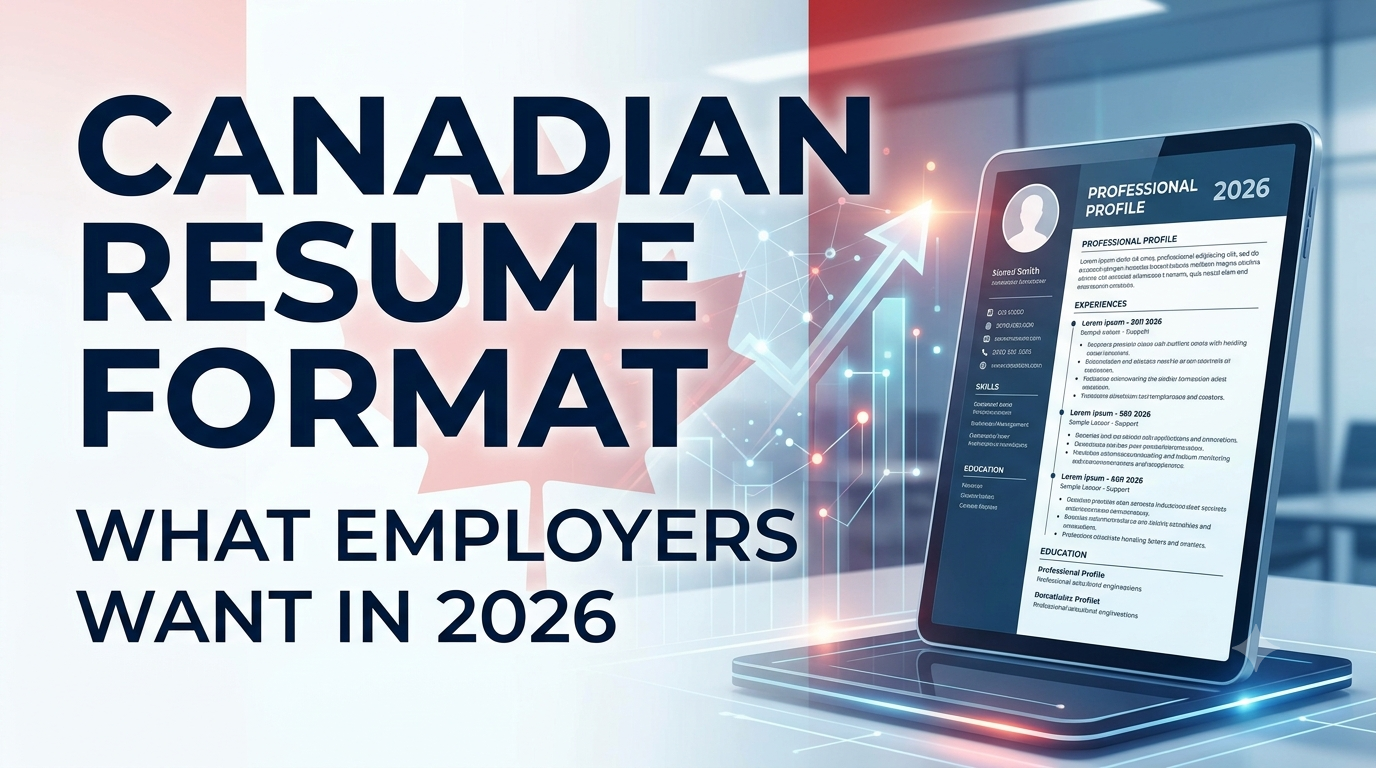
Canadian Resume Format: What Employers Want in 2026
Canada remains one of the world’s most popular destinations for skilled workers, international graduates, and newcomers seeking better career opportunities. But many qualified applicants quickly discover that landing a job involves more than having the right education and experience.
One of the biggest obstacles for newcomers is creating a resume that meets Canadian hiring standards.
A resume that performs well in another country may not be effective in Canada. Employers often spend only a few seconds reviewing each application before deciding whether to continue reading. That’s why your resume must be clear, concise, tailored to the role, and easy for both recruiters and Applicant Tracking Systems (ATS) to read.
In 2026, Canadian employers are placing greater emphasis on practical skills, measurable achievements, and ATS-friendly resumes. Understanding these expectations can significantly improve your chances of securing interviews.
This guide explains how to write a professional Canadian resume, what employers expect, common mistakes to avoid, and tips to help your application stand out.
Why the Canadian Resume Format Matters
Canadian employers follow hiring practices that may differ from those in many other countries. A resume that includes unnecessary personal information, outdated formatting, or generic job descriptions may not make it past the initial screening.
A well-structured Canadian resume can help you:
- Increase your chances of being shortlisted
- Pass Applicant Tracking System (ATS) screening
- Present your qualifications professionally
- Highlight your most relevant skills and achievements
- Compete effectively in Canada’s job market
Whether you’re applying in Toronto, Vancouver, Calgary, Ottawa, Edmonton, or elsewhere in Canada, using the correct resume format is essential.
What Is a Canadian Resume?
A Canadian resume is a concise document that highlights your qualifications, work experience, education, and skills relevant to a specific position.
Unlike the longer CVs commonly used in some countries, Canadian resumes are typically:
- Tailored to each job application
- Achievement-focused
- Easy to scan
- ATS-friendly
- Free of unnecessary personal details
The objective is simple: demonstrate why you’re the best candidate for the role.
How Long Should a Canadian Resume Be?
Resume length depends largely on your level of experience.
One Page
Ideal for:
- Recent graduates
- Entry-level applicants
- Professionals with fewer than five years of experience
Two Pages
Recommended for:
- Experienced professionals
- Managers and supervisors
- Skilled trades workers
- Senior-level candidates
Unless you’re applying for academic or research positions, it’s generally best to keep your resume to no more than two pages.
What Personal Information Should You Include?
Many international applicants unknowingly include information that Canadian employers neither expect nor request.
Include:
- Full name
- Phone number
- Professional email address
- City and province
- LinkedIn profile (optional)
Do Not Include:
- Date of birth
- Gender
- Marital status
- Religion
- Nationality
- Passport details
- Social Insurance Number (SIN)
- Photograph
Canadian employers generally avoid requesting these details during recruitment to support fair and non-discriminatory hiring practices.
Write a Strong Professional Summary
Your professional summary is often the first section recruiters read, so it should quickly communicate your value.
A strong summary should briefly describe:
- Your profession
- Years of experience
- Core strengths
- Key career achievements
Keep this section concise typically three to five sentences.
Showcase Your Key Skills
Employers increasingly rely on ATS software to identify candidates whose resumes contain the skills listed in the job posting.
Include a dedicated skills section featuring abilities relevant to the role.
Examples of Technical Skills
- Data Analysis
- Microsoft Excel
- SQL
- Python
- AutoCAD
- Cloud Computing
- Cybersecurity
- Financial Modelling
Examples of Soft Skills
- Leadership
- Communication
- Teamwork
- Problem Solving
- Time Management
- Customer Service
Whenever possible, align your skills with those mentioned in the job advertisement.
Focus on Achievements, Not Just Responsibilities
The work experience section is usually the most important part of your resume.
Canadian employers want evidence of results not simply a list of daily duties.
Instead of writing:
- Answered customer calls
- Resolved complaints
- Updated customer records
Show measurable impact, for example:
- Resolved an average of 80 customer enquiries daily while maintaining a 95% customer satisfaction rating.
- Reduced complaint escalations by 20% through improved issue resolution.
- Improved response times by introducing more efficient customer service procedures.
Whenever possible, include numbers, percentages, or measurable outcomes to demonstrate your contribution.
Organize Your Work Experience Correctly
List your employment history in reverse chronological order.
Each position should include:
- Job title
- Employer name
- Location
- Employment dates
- Key achievements
Prioritise accomplishments that relate directly to the position you’re applying for.
Include Your Education
Your education section should list:
- Degree or diploma
- Institution
- Location
- Graduation year
If your education was completed outside Canada, consider obtaining an Educational Credential Assessment (ECA). An ECA helps employers understand how your qualifications compare with Canadian educational standards.
Highlight Professional Certifications
Relevant certifications can strengthen your resume and demonstrate your commitment to professional development.
Examples include certifications in:
- Cloud Computing
- Cybersecurity
- Project Management
- Finance
- Human Resources
- Skilled Trades
List certifications immediately after your education section when they are relevant to the position.
Optimize Your Resume for Applicant Tracking Systems (ATS)
Many employers use ATS software to filter resumes before a recruiter reviews them.
To improve compatibility:
- Use standard section headings
- Incorporate relevant keywords naturally
- Avoid graphics, tables, and complex layouts
- Use clean, consistent formatting
- Save your resume in the requested file format
Review each job description carefully and include relevant terminology where it accurately reflects your experience.
Include Volunteer Experience
Volunteer work is highly valued in Canada, especially for newcomers who may have limited local work experience.
It can demonstrate:
- Leadership
- Initiative
- Community involvement
- Communication skills
- Transferable workplace experience
Relevant volunteer experience can strengthen your overall application and showcase your commitment beyond paid employment.
Common Resume Mistakes to Avoid
Even highly qualified applicants are sometimes overlooked because of avoidable errors.
Some of the most common mistakes include:
- Sending the same resume to every employer
- Including unnecessary personal information
- Using poor formatting or inconsistent fonts
- Listing job duties without measurable achievements
- Submitting resumes containing grammar or spelling errors
Customising your resume for each application can significantly improve your chances of success.
Recommended Canadian Resume Structure
A modern Canadian resume typically follows this order:
- Contact Information
- Professional Summary
- Core Skills
- Work Experience
- Education
- Certifications
- Volunteer Experience (if applicable)
- Additional Relevant Information
This format works well across most industries and occupations.
Canadian Resume Trends in 2026
Recruitment practices continue to evolve, and today’s employers increasingly focus on practical evidence of a candidate’s abilities.
Current hiring trends include:
- Skills-based recruitment
- Greater use of AI and ATS screening
- Increased demand for remote and hybrid work experience
- Digital portfolios for creative and technology professionals
- Greater emphasis on measurable achievements and business impact
Applicants who clearly demonstrate results often stand out from the competition.
Don’t Overlook Your Cover Letter
While your resume highlights your qualifications, a well-written cover letter introduces you as a candidate.
A strong cover letter should:
- Explain why you’re interested in the role
- Highlight your most relevant experience
- Demonstrate your enthusiasm for the organisation
- Show how your skills can contribute to the employer’s success
When requested, a personalised cover letter can strengthen your application.
Final Thoughts
A professionally written resume remains one of the most important tools in your Canadian job search.
In today’s competitive employment market, employers are looking for candidates who can clearly demonstrate their skills, achievements, and ability to add value.
Keep your resume concise, tailor it to every job application, optimise it for Applicant Tracking Systems, and focus on measurable accomplishments rather than simply listing responsibilities.
Whether you’re a newcomer, international student, skilled worker, or experienced professional, mastering the Canadian resume format can significantly improve your chances of securing interviews and building a successful career in Canada.
Remember your resume is often your first opportunity to impress a potential employer. Make every section count.