Australia Skilled Migration Visa 2026: Requirements, Occupation List, Points Test and How to Apply
Australia remains one of the world’s leading destinations for skilled professionals seeking better career opportunities, a high standard of living, and a clear pathway to permanent residency. As labour shortages continue across key industries, the Australian government relies on skilled migration to fill critical workforce gaps.
Professionals in healthcare, engineering, information technology, education, construction, and skilled trades continue to be in high demand. For many applicants from countries such as Nigeria, Ghana, Kenya, South Africa, and beyond, the Skilled Migration Program offers one of the most practical routes to living and working in Australia.
This guide explains how Australia’s Skilled Migration Program works in 2026, including the available visa options, eligibility requirements, points system, skills assessments, and the application process.
What Is Australia’s Skilled Migration Program?
Australia’s Skilled Migration Program is designed to attract qualified professionals whose skills are needed in the country’s labour market.
Unlike some work visas, several skilled migration pathways allow eligible applicants to apply without first securing a job offer from an Australian employer.
Successful applicants may receive permanent residency, giving them the right to live, work, and study anywhere in Australia while enjoying many of the same benefits as Australian citizens.
Main Skilled Migration Visa Options
Skilled Independent Visa (Subclass 189)
The Skilled Independent Visa is one of the most popular migration pathways because it does not require sponsorship from an employer, family member, or state government.
Key benefits include:
- Permanent residency upon approval
- Freedom to live and work anywhere in Australia
- Access to Australia’s public healthcare system
- A pathway to Australian citizenship
This visa is ideal for highly skilled professionals who meet the required points threshold.
Skilled Nominated Visa (Subclass 190)
The Skilled Nominated Visa requires nomination by an Australian state or territory government.
Advantages include:
- Permanent residency
- Additional points through state nomination
- Improved chances of receiving an invitation to apply
State governments nominate applicants whose occupations are needed in their regions.
Skilled Work Regional Visa (Subclass 491)
The Skilled Work Regional Visa encourages migrants to settle in designated regional areas across Australia.
Benefits include:
- Additional migration points
- Priority in some invitation rounds
- A pathway to permanent residency after meeting residency requirements
Regional Australia continues to offer excellent employment opportunities across many industries.
Check the Skilled Occupation List
Before applying, you’ll need to confirm that your occupation appears on Australia’s Skilled Occupation List.
Some of the most sought-after professions include:
Healthcare
- Registered Nurses
- Midwives
- Physiotherapists
- Occupational Therapists
- Medical Laboratory Scientists
Information Technology
- Software Engineers
- Systems Analysts
- Cybersecurity Specialists
- Network Engineers
- Cloud Engineers
Engineering
- Civil Engineers
- Mechanical Engineers
- Electrical Engineers
- Mining Engineers
Education
- Secondary School Teachers
- Early Childhood Teachers
- Special Education Teachers
Skilled Trades
- Electricians
- Welders
- Carpenters
- Plumbers
- Automotive Technicians
Occupation lists are reviewed regularly, so always check the latest requirements before applying.
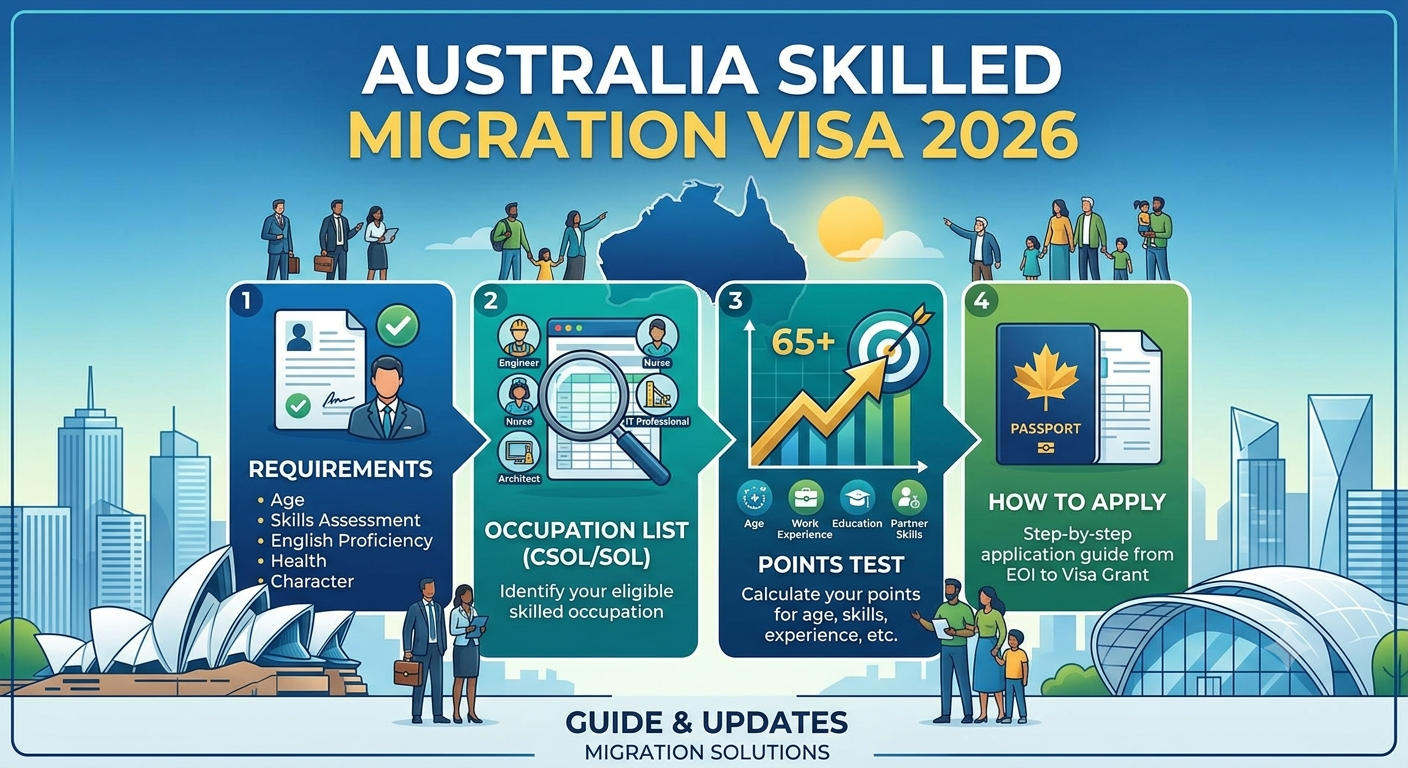
Understanding Australia’s Points System
Australia uses a points-based system to rank skilled migration applicants.
While the minimum requirement is generally 65 points, many occupations receive invitations only at higher scores due to strong competition.
Age
Applicants receive points based on their age at the time of invitation.
Generally, applicants between 25 and 32 years old receive the highest number of points.
English Language Ability
English proficiency is an important factor in the points test.
Applicants usually demonstrate their language skills through approved tests such as:
- IELTS
- PTE Academic
- TOEFL iBT
Higher English scores can significantly increase your overall points.
Skilled Work Experience
Points are awarded for relevant work experience gained both overseas and within Australia.
Generally, the more years of skilled experience you have, the stronger your application.
Educational Qualifications
Points are awarded based on your highest completed qualification, including:
- Doctoral degrees
- Bachelor’s degrees
- Diplomas and recognised trade qualifications
State or Territory Nomination
Applicants nominated by an Australian state or territory may receive additional points, improving their chances of receiving an invitation.
English Language Requirements
Most skilled migration applicants must demonstrate English proficiency.
Accepted language tests include:
- IELTS Academic or General Training
- PTE Academic
- TOEFL iBT
Achieving a higher language score not only satisfies visa requirements but can also improve your competitiveness in the points system.
Skills Assessment
Before submitting an Expression of Interest (EOI), you’ll usually need a positive skills assessment.
A skills assessment confirms that your qualifications and work experience meet Australian standards.
The assessing authority depends on your occupation.
Examples include:
- Engineers Australia
- Australian Computer Society (ACS)
- Australian Nursing and Midwifery Accreditation Council (ANMAC)
- VETASSESS
- Trades Recognition Australia (TRA)
A successful assessment is an essential step in the migration process.
Step-by-Step Application Process
Step 1: Confirm Your Occupation
Check that your profession appears on Australia’s current Skilled Occupation List.
Step 2: Complete a Skills Assessment
Submit your qualifications and employment history to the relevant assessing authority.
Step 3: Take an English Language Test
Complete an approved English exam and obtain your results.
Step 4: Calculate Your Points
Estimate your score using Australia’s official points system to determine your eligibility.
Step 5: Submit an Expression of Interest (EOI)
Create and submit your profile through the SkillSelect system.
Step 6: Receive an Invitation to Apply
Applicants with competitive scores may receive an invitation during one of Australia’s invitation rounds.
Step 7: Lodge Your Visa Application
Submit your application along with supporting documents, health examinations, police clearances, and visa fees.
Step 8: Wait for a Decision
Processing times vary depending on the visa subclass, occupation, and individual circumstances.
Costs to Consider
When planning your migration, budget for expenses such as:
- English language tests
- Skills assessment fees
- Visa application charges
- Medical examinations
- Police clearance certificates
- Document translation and certification
The total cost will depend on your visa type and whether you’re applying with family members.
Does Skilled Migration Lead to Permanent Residency?
Yes.
The Skilled Independent Visa (Subclass 189) and Skilled Nominated Visa (Subclass 190) both provide direct pathways to permanent residency.
Permanent residents can live and work in Australia indefinitely and may eventually qualify for Australian citizenship after meeting residency requirements.
Tips to Strengthen Your Application
You can improve your chances of receiving an invitation by:
- Achieving a high IELTS or PTE score
- Gaining additional skilled work experience
- Applying for state or territory nomination
- Considering regional migration opportunities
- Ensuring all documents are accurate and complete
- Keeping your Expression of Interest up to date
Final Thoughts
Australia continues to offer outstanding opportunities for skilled professionals looking to advance their careers and build a secure future. With ongoing demand across healthcare, engineering, IT, education, and skilled trades, the Skilled Migration Program remains one of the country’s most accessible pathways to permanent residency.
By understanding the visa options, meeting the eligibility requirements, completing a successful skills assessment, and submitting a strong application, you can significantly improve your chances of receiving an invitation to migrate.
Whether you’re seeking better career prospects, higher earning potential, or a new life for your family, Australia’s skilled migration pathway could be your first step toward achieving those goals.