Top Reasons Australian Visa Applications Are Denied in 2026 (And How to Avoid Costly Mistakes)
Australia remains one of the world’s most popular destinations for skilled workers, international students, entrepreneurs, and families looking to build a better future. With its strong economy, excellent healthcare, high-quality education, and outstanding quality of life, it’s easy to see why thousands of people apply for Australian visas every year.
However, getting a visa isn’t guaranteed.
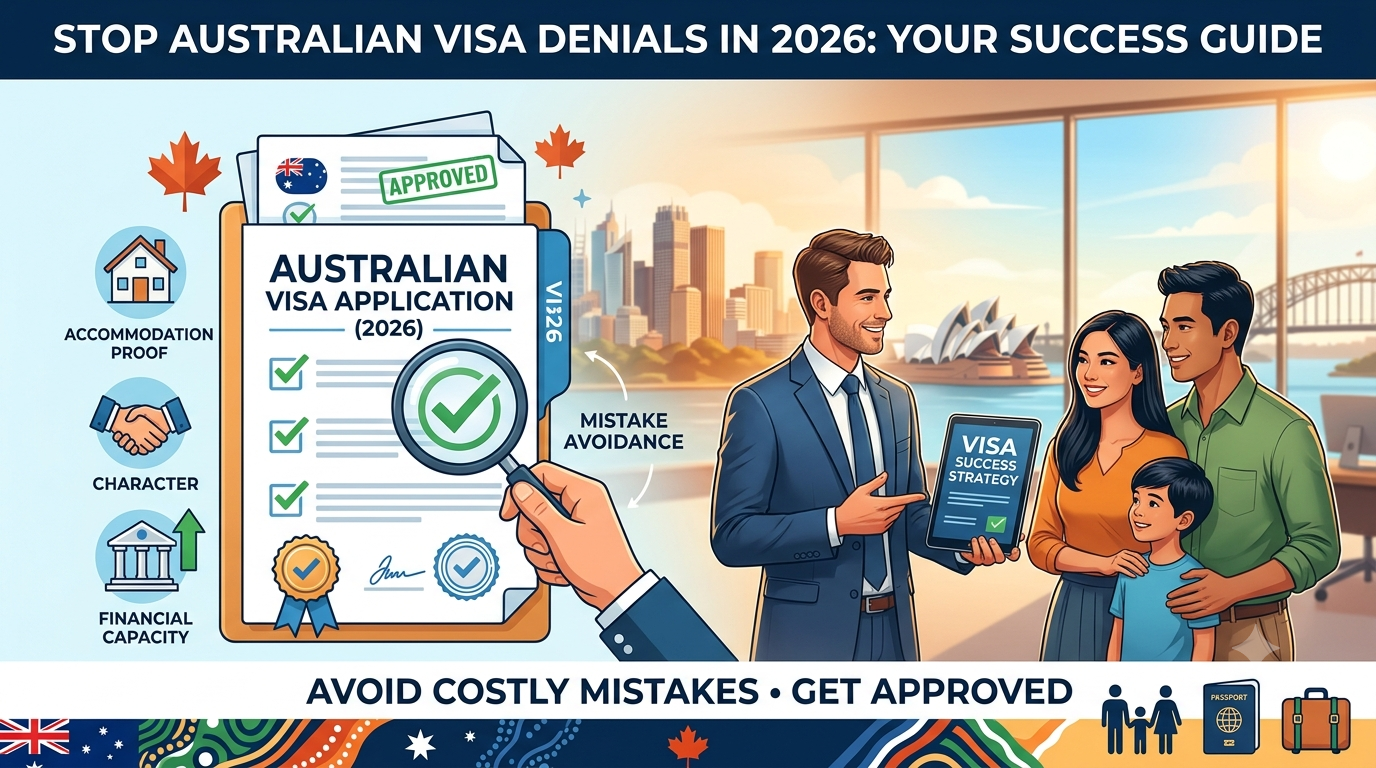
In 2026, Australia’s immigration system continues to apply strict eligibility checks, advanced document verification, and tighter compliance measures. Even a small mistake can lead to delays, requests for additional information, or a visa refusal.
The good news is that many refusals are preventable. By understanding the most common reasons applications are rejected, you can prepare a stronger application and improve your chances of success.
1. Providing Incorrect or Misleading Information
One of the fastest ways to have your application refused is by submitting false or inconsistent information.
Australian immigration authorities carefully verify every application and compare the details provided with supporting documents and official records.
Common issues include:
- Incorrect employment history
- Fake or altered educational certificates
- Inconsistent travel history
- Modified bank statements
- Undisclosed criminal convictions
Even honest mistakes can raise concerns if the information doesn’t match.
How to avoid it:
- Review your application carefully before submission.
- Ensure dates and details are consistent across all documents.
- Never submit forged documents.
- Be honest about previous visa refusals or legal matters.
2. Insufficient Financial Evidence
Many visa categories require proof that you can financially support yourself during your stay in Australia.
This is especially important for:
- Student visas
- Visitor visas
- Temporary work visas
Applications may be refused if immigration officers believe your financial documents are unreliable or incomplete.
Common issues include:
- Unexplained large deposits
- Inconsistent income records
- Missing bank statements
- Unverified sponsorship funds
How to avoid it:
Provide clear financial evidence such as:
- Recent bank statements
- Payslips
- Tax returns
- Sponsorship letters (if applicable)
- Investment or asset documentation
3. Not Meeting English Language Requirements
Many Australian visa programs require applicants to demonstrate English proficiency through approved language tests.
Accepted tests typically include:
- IELTS
- PTE Academic
- TOEFL iBT
Applications may be rejected if:
- Your score is below the required level.
- Your test results have expired.
- You submit results from an unapproved test.
How to avoid it:
- Confirm the language requirements for your visa subclass.
- Prepare thoroughly before taking the test.
- Sit the exam early enough to allow time for a retake if necessary.
4. Failing Health Requirements
Australia has strict health standards designed to protect public health and manage healthcare costs.
Applicants may be refused if medical examinations identify conditions that could:
- Require significant healthcare resources
- Pose public health risks
- Result in excessive medical expenses
How to avoid it:
- Complete your medical examination with an approved panel physician.
- Disclose any existing medical conditions honestly.
- Provide additional medical reports if requested.
5. Character or Criminal Record Issues
Applicants must satisfy Australia’s character requirements.
A visa may be refused if you have:
- Serious criminal convictions
- Drug-related offences
- Domestic violence records
- Links to criminal organisations
How to avoid it:
Provide:
- Police clearance certificates
- Court documents (if applicable)
- Character references where appropriate
Being transparent is always better than hiding past issues.
6. Missing or Incomplete Documents
Incomplete applications remain one of the most common reasons for visa refusal.
Frequently overlooked documents include:
- Passport copies
- Birth certificates
- Marriage certificates
- Employment references
- Academic transcripts
- Health insurance documents
How to avoid it:
Create a checklist before submitting your application and ensure all required documents are included.
If documents are not in English, obtain certified translations.
7. Weak Genuine Student Intent (For Student Visas)
Student visa applicants must demonstrate that they genuinely intend to study in Australia and comply with visa conditions.
Applications may be refused if:
- Personal statements appear copied or generic.
- Educational plans are unclear.
- Career goals are not well explained.
How to strengthen your application:
Clearly explain:
- Why you chose Australia
- Why you selected your institution
- How the course supports your career goals
- Your plans after graduation
Make your statement personal and authentic.
8. Employment Experience Cannot Be Verified
For skilled migration visas, work experience is a key requirement.
Applications may be refused if authorities cannot verify your:
- Job titles
- Employment dates
- Salary records
- Employer references
Provide supporting documents such as:
- Employment contracts
- Payslips
- Tax records
- Reference letters
- Social security records
9. Unsuccessful Skills Assessment
Many skilled visa pathways require a positive skills assessment from an authorised assessing body.
Applications may fail if:
- Qualifications don’t match your nominated occupation.
- Required experience is insufficient.
- Documents are incomplete.
Different professions use different assessment authorities, so always follow the requirements for your occupation.
10. Previous Immigration Violations
Australian immigration authorities review your global immigration history.
Previous issues such as:
- Visa overstays
- Illegal employment
- Deportation
- Breaching visa conditions
can negatively affect your application.
If you’ve had immigration issues before, explain them honestly and provide supporting documentation where appropriate.
11. Inadequate Health Insurance
Certain visa categories require applicants to maintain approved health insurance.
Applications may be refused if:
- Coverage doesn’t meet visa requirements.
- Insurance expires too early.
- Supporting documents are missing.
Student visa holders, for example, generally require Overseas Student Health Cover (OSHC).
12. Problems With Employer Sponsorship
Employer-sponsored visas are carefully assessed to ensure both the employer and applicant meet all requirements.
Issues may arise if:
- The employer isn’t eligible to sponsor workers.
- Required sponsorship documents are missing.
- The position isn’t considered genuine.
Before applying, confirm that your employer has completed all sponsorship obligations.
13. Insufficient Evidence for Partner Visas
Partner and spouse visas receive extensive scrutiny.
Immigration officers look for proof that the relationship is genuine and ongoing.
Helpful evidence includes:
- Joint bank accounts
- Shared lease agreements
- Travel history together
- Photos
- Communication records
- Shared financial responsibilities
The more consistent your evidence, the stronger your application.
14. Choosing the Wrong Visa Category
Many applications are refused simply because applicants choose a visa that doesn’t match their circumstances.
Examples include:
- Applying for skilled migration without meeting the points requirement
- Using the wrong occupation code
- Applying for a visitor visa when a student or work visa is more appropriate
Research your options carefully before submitting an application.
15. Using Outdated Immigration Information
Australia regularly updates its immigration policies.
Changes may affect:
- Occupation lists
- English language requirements
- Processing priorities
- Skills assessments
- Health regulations
Relying on outdated advice can lead to costly mistakes.
Always refer to the latest official immigration information before applying.
Can You Apply Again After a Visa Refusal?
Yes. A visa refusal does not necessarily end your plans to move to Australia.
Depending on your situation, you may be able to:
- Submit a stronger application
- Provide additional supporting evidence
- Appeal certain decisions where eligible
- Seek advice from a registered migration professional
The key is to understand why your application was refused and correct those issues before applying again.
Final Thoughts
Australia continues to welcome skilled workers, students, entrepreneurs, and families from around the world. While the immigration process has become more rigorous in 2026, careful preparation can significantly improve your chances of success.
Most visa refusals result from avoidable mistakes, such as incomplete documentation, inaccurate information, or failing to meet eligibility requirements. By staying informed, submitting accurate documents, and ensuring your application meets current immigration rules, you’ll be in a much stronger position to achieve your goal of living and working in Australia.